Over 90 percent of British entertainment venues use mirror balls to create captivating atmospheres on the dance floor. From nightclubs in London to intimate event spaces across the United Kingdom, these shimmering icons rely on a specialised device called a light rotator to keep the sparkle in motion. Understanding how light rotators work and choosing the right type ensures those dazzling reflections stay smooth, safe, and visually stunning for every performance.
Table of Contents
- Defining A Light Rotator For Mirror Balls
- Types Of Light Rotators And Their Key Differences
- How Light Rotators Work And Typical Setups
- Legal And Safety Standards In The UK
- Common Missteps And Cost Considerations
Key Takeaways
| Point | Details |
|---|---|
| Light Rotators Enhance Atmosphere | Light rotators transform mirror balls into dynamic lighting instruments, generating captivating displays for events. |
| Select Based on Venue Needs | Choose a rotator type based on venue size, mirror ball weight, and desired complexity of lighting effects. |
| Compliance with Safety Standards | All light rotators must meet UK health and safety regulations, necessitating thorough installation checks and documentation. |
| Consider Total Ownership Costs | Budget for additional costs beyond purchase, including installation, maintenance, and operational expenses for rotators. |
Defining a Light Rotator for Mirror Balls
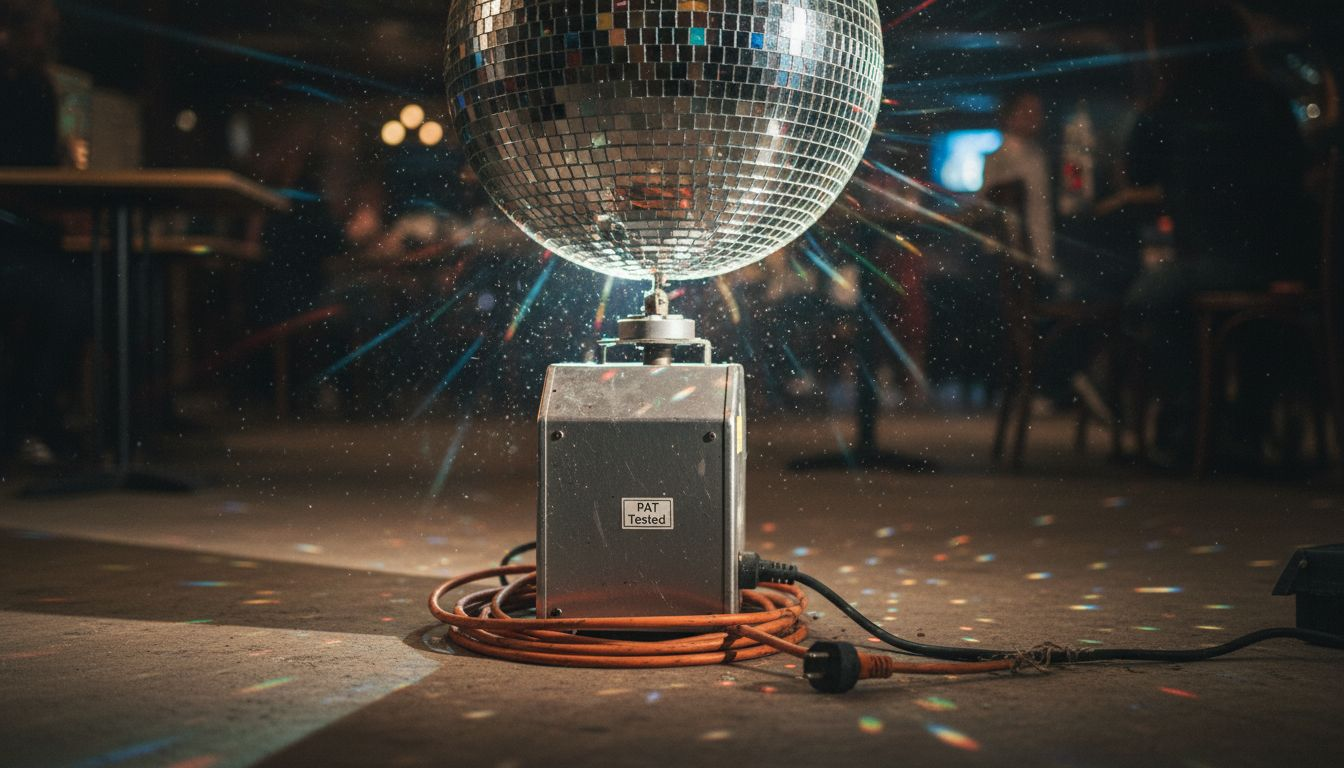
A light rotator is a specialised motorised device designed to rotate mirror balls and create dynamic lighting effects for events and entertainment spaces. These compact mechanical units enable disco balls to spin smoothly, generating mesmerising light patterns across walls, floors, and ceilings.
Typically mounted directly beneath a mirror ball, light rotators transform static reflective spheres into active lighting instruments. The rotator’s motor provides consistent, controlled movement that allows the mirror ball to spin at predetermined speeds, creating sweeping light displays. Professional event designers and venue managers frequently use these devices to enhance atmospheric lighting, adding visual dynamism to dance floors, concert stages, and performance spaces.
Light rotators come in various specifications, ranging from small battery-operated models suitable for home parties to robust electric units designed for large commercial venues. Key features often include adjustable rotation speeds, silent motor operation, and compatibility with different mirror ball sizes. Some advanced models offer programmable rotation patterns, allowing lighting technicians to create sophisticated visual sequences that synchronise with music or event rhythms.
Pro Tip – Rotation Selection: Choose a light rotator with variable speed controls that match your specific event requirements, ensuring smooth and controlled mirror ball movement tailored to your desired atmospheric effect.
Types of Light Rotators and Their Key Differences
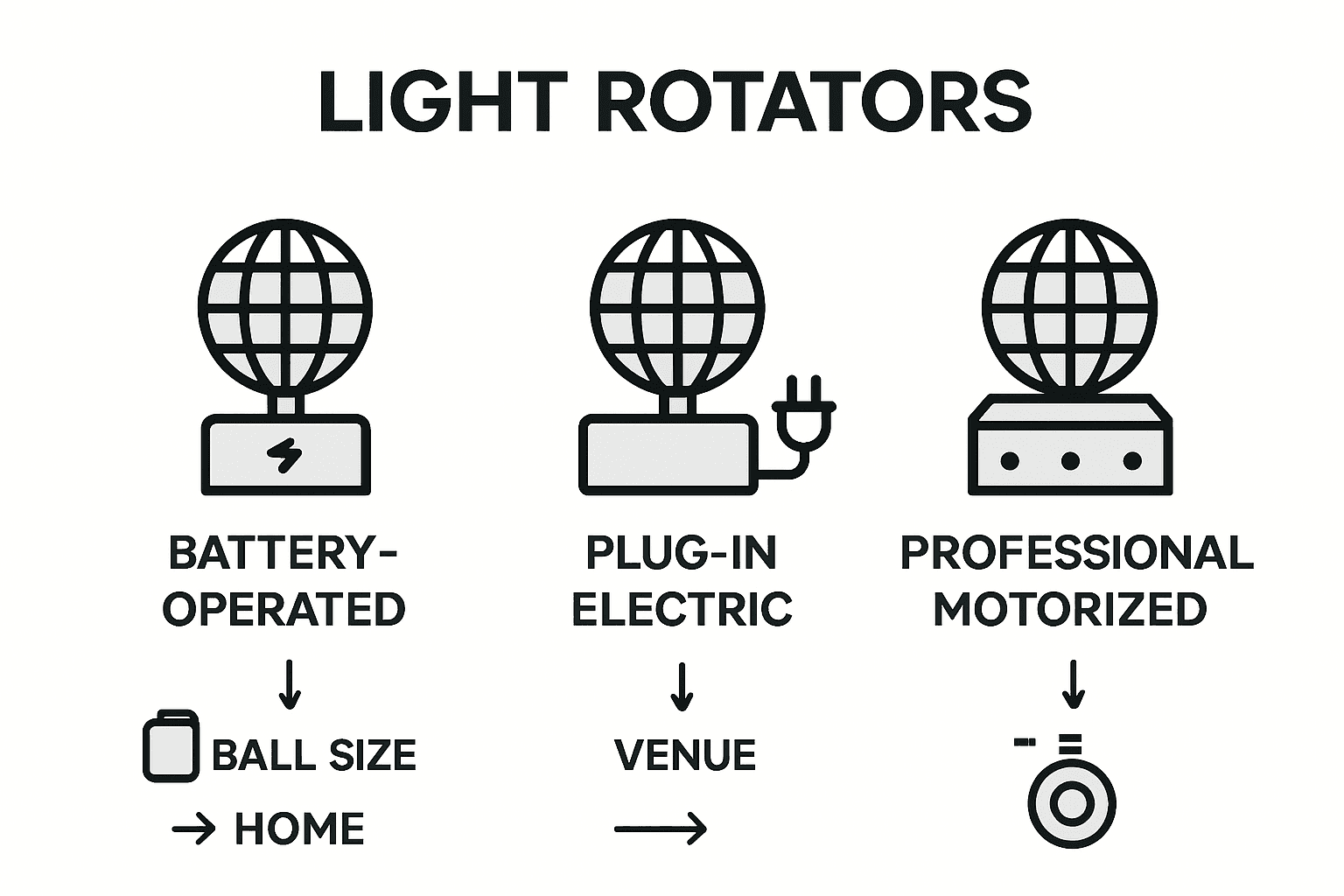
Light rotators are categorised into several distinct types, each designed to meet specific event lighting requirements. Mirror ball accessory ranges typically include three primary rotator classifications: battery-operated, plug-in electric, and professional-grade motorised units.
Battery-operated rotators represent the entry-level option, ideal for home parties and small venues. These compact devices are lightweight, portable, and typically support smaller mirror balls up to 20 centimetres in diameter. In contrast, plug-in electric rotators offer more consistent performance, providing stable rotation through direct electrical connection. They support medium-sized mirror balls and feature more reliable motor mechanisms compared to battery-powered alternatives.
Professional-grade motorised rotators represent the pinnacle of mirror ball rotation technology. These sophisticated units are engineered for commercial venues like nightclubs, concert halls, and large event spaces. Key features include variable speed controls, silent operation, robust construction, and the ability to support substantial mirror balls weighing up to 5 kilograms. Advanced models often incorporate programmable rotation patterns, allowing lighting technicians to create intricate, synchronised visual displays that perfectly complement musical performances.
Pro Tip – Rotator Selection: Assess your specific event requirements by considering mirror ball size, venue dimensions, and desired lighting complexity before selecting an appropriate light rotator.
Here is a comparison of the three main types of light rotators to guide your selection:
| Type of Rotator | Ideal Venue/Application | Typical Ball Size Supported | Key Distinguishing Feature |
|---|---|---|---|
| Battery-operated | Home parties, small halls | Up to 20 cm | Lightweight and highly portable |
| Plug-in electric | Medium venues, dance floors | Up to 30 cm | Consistent power and performance |
| Professional-grade motorised | Large events, nightclubs | Up to 5 kg ball weight | Programmable, silent, robust |
How Light Rotators Work and Typical Setups
Light rotators function through a sophisticated mechanical system designed to create smooth, controlled rotation of mirror balls. Heavy duty DMX mirror ball rotators demonstrate the advanced technological mechanisms underlying these precision lighting devices. The core components typically include a compact electric motor, a mounting bracket, and a rotating mechanism that enables consistent, adjustable movement.
The operational principle involves a low-profile motor connected directly beneath the mirror ball, generating a smooth, circular rotation. Most professional rotators feature adjustable speed settings, allowing lighting technicians to control the rotation rate from slow, subtle movements to rapid, dynamic spins. Some advanced models incorporate microprocessor controls that enable precise speed regulation, ensuring seamless synchronisation with music or event dynamics. The mounting system is engineered to support various mirror ball sizes, with universal adapters that accommodate different ball diameters and weights.
Typical setups for light rotators vary depending on the venue and event requirements. In nightclubs and large entertainment spaces, rotators are often mounted on overhead truss systems or specialised lighting rigs. Smaller venues might use ceiling-mounted or stand-mounted rotators that provide flexible positioning. Professional lighting designers frequently employ multiple rotators to create complex, layered lighting effects, using DMX control systems to programme intricate rotation patterns and synchronise multiple mirror balls simultaneously.
Pro Tip – Installation Precision: Ensure your light rotator is mounted securely and perfectly centred to prevent unbalanced rotation and potential mirror ball damage during high-speed spinning.
Legal and Safety Standards in the UK
Light rotators used in public spaces and commercial venues must comply with stringent British health and safety regulations. Event organisers and venue managers are legally responsible for ensuring that all lighting equipment, including mirror ball rotators, meets the Provision and Use of Work Equipment Regulations (PUWER) standards. These regulations mandate comprehensive safety checks, regular maintenance, and proper installation of mechanical equipment used in entertainment settings.
The primary legal considerations for light rotator installations include electrical safety, structural integrity, and load-bearing capabilities. Professional venues must demonstrate that rotators are securely mounted, capable of supporting specified weight limits, and installed in accordance with manufacturer guidelines. Electrical components must conform to British Standard (BS) electrical safety requirements, which specify insulation standards, earthing protocols, and protection against mechanical stress. Venues hosting public events are additionally required to conduct risk assessments that specifically address potential mechanical failures or equipment-related accidents.
Certification plays a crucial role in demonstrating compliance with UK safety standards. Event lighting professionals must obtain appropriate documentation, including electrical safety certificates, manufacturer installation guidelines, and periodic inspection reports. Small venues and large commercial spaces alike must maintain comprehensive maintenance logs, documenting regular inspections, mechanical tests, and any repairs or modifications to light rotator systems. Insurance providers often require detailed documentation of equipment safety to validate public liability coverage for entertainment venues.
Pro Tip – Safety Documentation: Maintain a dedicated file containing all installation certificates, manufacturer specifications, and maintenance records for your light rotators to ensure rapid compliance verification during official inspections.
To help with planning and compliance, here is a summary of major UK safety and documentation requirements for light rotators:
| Requirement | Purpose | Who Must Comply |
|---|---|---|
| PUWER/BS safety standards | Ensure safe equipment use and operation | All commercial/public venues |
| Regular inspections | Prevent failures, verify safe mounting | Venue managers, event organisers |
| Documentation maintenance | Demonstrate compliance and for insurance | Lighting professionals, venues |
Common Missteps and Cost Considerations
Event professionals often encounter significant challenges when selecting light rotators, with budget miscalculations being a primary concern. Mirror ball rotator selection requires careful cost considerations that extend beyond the initial purchase price, encompassing long-term operational expenses, maintenance requirements, and compatibility with existing lighting infrastructure.
Common missteps include purchasing rotators that are incompatible with existing mirror balls or venue specifications. Many event organisers mistakenly prioritise low-cost options without considering critical factors such as motor durability, weight capacity, and rotation control mechanisms. Professional-grade rotators might represent a higher initial investment, but they typically offer superior reliability, longer operational lifespans, and more sophisticated features like variable speed controls and DMX integration. Cheaper alternatives often result in frequent replacements, increased maintenance costs, and potential performance limitations during critical events.
Budget allocation for light rotators should incorporate several hidden expenses beyond the initial equipment cost. These include installation charges, potential electrical system modifications, periodic maintenance, spare parts, and potential repair or replacement expenses. Venue-specific requirements can dramatically influence total cost of ownership, with larger entertainment spaces demanding more robust, high-performance rotators that can withstand continuous operation and support heavier mirror balls. Small venues and home users might benefit from more economical solutions, but should still prioritise fundamental performance and safety standards over absolute lowest price.
Pro Tip – Budget Wisdom: Calculate total ownership costs by considering equipment price, installation expenses, expected lifespan, and potential maintenance requirements before making your final light rotator investment.
Enhance Your Events with the Perfect Light Rotator and Mirror Ball Combination
Choosing the right light rotator for your mirror ball can be challenging. You want reliable rotation, ideal speed control, and compliance with safety standards to create captivating light effects without worry. Whether you are organising a home party, managing a nightclub, or planning a large-scale event, selecting the correct rotator that matches your mirror ball’s size and event needs is essential to avoid costly mistakes and ensure a stunning visual atmosphere.
Discover a wide selection of high-quality mirror balls and accessories designed to work seamlessly with light rotators at mirror-balls.co.uk. Our expert knowledge and comprehensive product range enable you to find the perfect solution tailored to your venue’s size and budget. Don’t compromise on safety or performance; explore our collection today and take the first step toward transforming your event with captivating, professional lighting effects. Visit mirror-balls.co.uk now and choose from our expertly curated products to elevate your next event effortlessly.
Frequently Asked Questions
What is a light rotator?
A light rotator is a motorised device designed to rotate mirror balls, creating dynamic lighting effects for events and entertainment spaces. It allows the mirror ball to spin smoothly, generating light patterns across walls, floors, and ceilings.
How do light rotators work?
Light rotators work through a compact electric motor connected directly beneath the mirror ball, enabling smooth, controlled rotation. Many models feature adjustable speed settings to create various lighting effects.
What types of light rotators are available?
Light rotators are typically classified into three types: battery-operated for small venues, plug-in electric for medium venues, and professional-grade motorised units suitable for large events. Each type has different capabilities and ideal applications.
What are the key considerations when selecting a light rotator?
When selecting a light rotator, consider the size of the mirror ball, the venue dimensions, desired rotation speeds, and the complexity of lighting effects required. Ensure the rotator is compatible with your mirror ball and meets your specific event needs.