Every event planner knows that crafting the right atmosphere can make or break a celebration. Mood lighting plays a vital role in shaping how guests feel the moment they step into a venue, from romantic wedding receptions to energetic party dance floors. Incorporating specialised lighting techniques with mirror balls allows you to transform ordinary spaces into truly memorable experiences, offering endless creative possibilities for visual impact and emotional resonance.
Table of Contents
- Mood Lighting: Core Definition And Concepts
- Key Types And Popular Uses For Events
- How Mood Lighting Works In Venues
- Choosing Colours, Fixtures And Mirror Balls
- Common Mistakes In Mood Lighting Design
Key Takeaways
| Point | Details |
|---|---|
| Importance of Mood Lighting | Mood lighting significantly influences emotional responses and perceptions in various environments. Understanding its characteristics is crucial for effective design. |
| Types of Event Lighting | Familiarity with key lighting types is essential for creating suitable atmospheres, including ambient, accent, and dynamic lighting tailored to specific events. |
| Proper Testing | Conducting preliminary tests and venue walk-throughs is vital to ensure the selected lighting scheme achieves the intended emotional effect. |
| Common Design Pitfalls | Avoid common mistakes such as overlooking natural light and focusing solely on aesthetics, as these can compromise the overall impact of event lighting. |
Mood lighting: Core definition and concepts
Mood lighting represents a sophisticated approach to manipulating ambient illumination, designed to deliberately evoke specific emotional responses within a space. Specialized lighting techniques can transform the psychological atmosphere of an environment, influencing human perception and behaviour through strategic colour and brightness selection.
At its core, mood lighting goes far beyond simple illumination. It involves a nuanced understanding of how light wavelengths, intensity, and colour temperature interact with human psychological states. By carefully selecting lighting parameters, event designers can create environments that subtly guide emotional experiences, whether that means generating excitement for a wedding reception or cultivating relaxation in a corporate networking event.
Key characteristics of effective mood lighting include:
- Precise colour temperature control
- Strategic light intensity management
- Deliberate placement of light sources
- Dynamic colour transition capabilities
- Sensitivity to spatial dimensions and architectural features
Scientific research demonstrates that mood lighting can profoundly impact human responses. Specific lighting conditions significantly influence motivation and emotional engagement, with different lighting types producing measurably distinct psychological outcomes. Warm tones might create intimacy, while cool blues could generate a sense of calm professionalism.
Pro tip: When designing mood lighting for events, always conduct a preliminary test to ensure your chosen lighting scheme produces the precise emotional atmosphere you intend.
Key types and popular uses for events
Event lighting encompasses a diverse range of techniques designed to transform spaces and create memorable experiences. Common event lighting approaches include strategic illumination styles that serve distinct purposes across different event types, from corporate conferences to wedding celebrations.
The primary categories of event lighting can be broadly classified into several key types:
- Ambient lighting: Creates soft, general illumination
- Accent lighting: Highlights specific focal points or architectural features
- Task lighting: Provides focused illumination for specific activities
- Decorative lighting: Adds visual interest and aesthetic appeal
- Dynamic intelligent lighting: Changes colour and pattern to generate energy
Uplighting represents a particularly powerful technique in event design. Professional lighting approaches utilise colour theory to transform spaces, washing walls and ceilings with carefully selected hues that evoke specific emotional responses. For instance, warm amber tones might create an intimate wedding atmosphere, while cool blues could generate a professional ambience for corporate events.
Specific event types demand tailored lighting strategies. Wedding receptions might incorporate soft, romantic lighting with fairy lights and gentle colour transitions, whereas corporate conferences could benefit from precise, focused illumination that enhances presentation visibility and maintains professional energy.
Pro tip: Always conduct a venue walk-through and lighting test before your event to ensure your chosen lighting design achieves the exact emotional and functional atmosphere you desire.
Here is a quick reference for how key lighting types influence event experiences:
| Lighting Type | Typical Effect | Best For |
|---|---|---|
| Ambient lighting | Soft, even illumination | General mood and comfort |
| Accent lighting | Highlights features | Drawing attention to decor |
| Task lighting | Focused, practical light | Presentations or work areas |
| Decorative lighting | Visual embellishment | Enhancing event aesthetics |
| Dynamic lighting | Changing colours/patterns | Energising and entertaining |
How mood lighting works in venues
Lighting design techniques transform venue atmospheres by strategically manipulating light characteristics. The science behind mood lighting involves precise control of multiple interconnected elements that influence human perception and emotional experience.
The primary mechanisms of mood lighting include:
- Colour temperature management
- Light intensity modulation
- Strategic light placement
- Dynamic colour transitions
- Psychological response engineering
Temperature and intensity play crucial roles in emotional manipulation. Warm lighting (approximately 2700K) generates feelings of comfort and intimacy, ideal for dining areas or romantic settings, while cooler, brighter illumination stimulates alertness and energy. Performance lighting design utilises advanced techniques like backlighting, spotlighting, and sophisticated wash effects to guide audience focus and create immersive experiences.
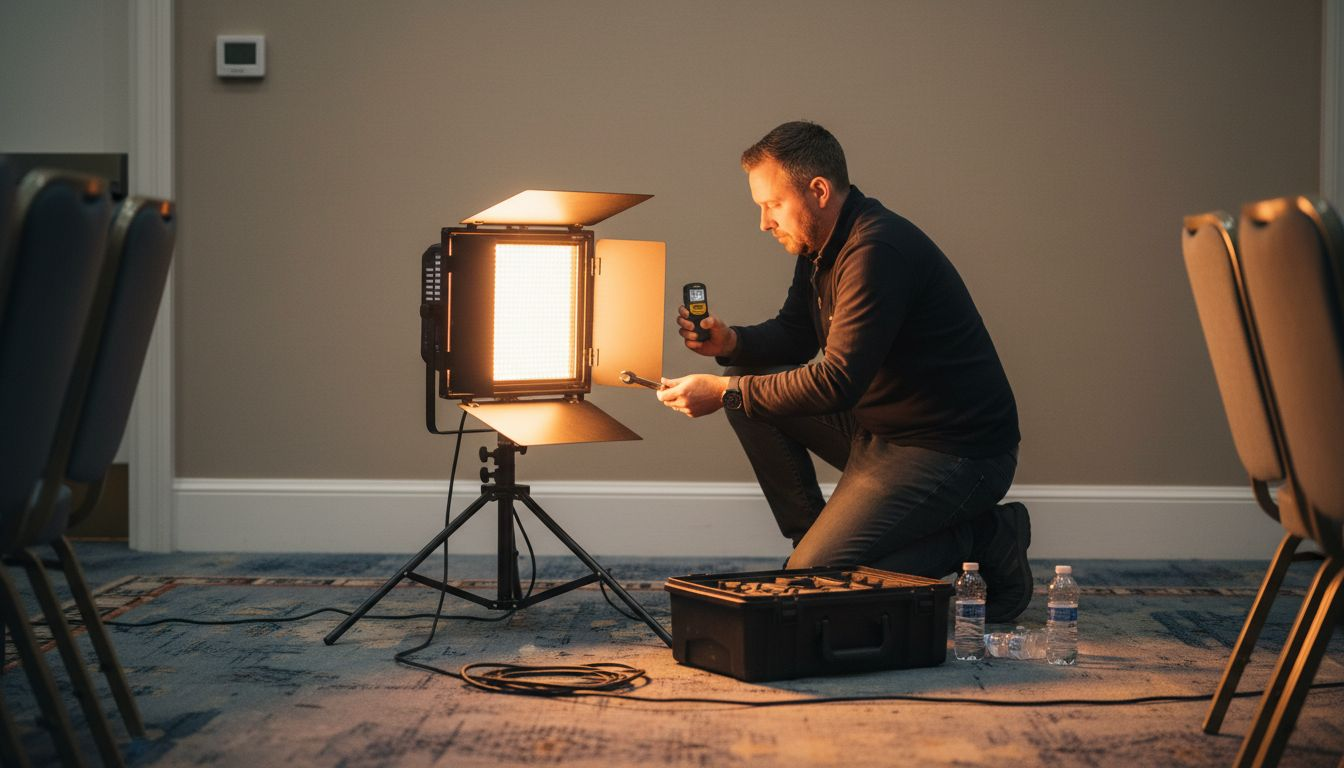
Modern venues leverage technological innovations, particularly programmable LED systems, which allow instantaneous mood transitions. These systems enable event designers to craft precise emotional journeys, seamlessly shifting lighting to match different event phases – from intimate dinner moments to high-energy dance segments.
Pro tip: Invest in lighting systems with programmable preset configurations to enable smooth atmospheric transitions during your event.
Choosing colours, fixtures and mirror balls
Mirror ball lighting design requires strategic selection of colours, fixtures, and reflective elements to create captivating visual experiences. Understanding the intricate relationship between lighting components helps event designers craft immersive atmospheric environments.
Key considerations for mirror ball and fixture selection include:
- Size compatibility: Matching ball dimensions to venue scale
- Reflective quality: Number and arrangement of mirror tiles
- Rotation mechanisms: Static versus motorised options
- Complementary lighting fixtures: Spotlights and colour compatibility
- Mounting flexibility: Ceiling, stand, or custom installation points
Professional-grade mirror balls transform spaces by dispersing light through precisely arranged small mirrors, creating dynamic, multidirectional light patterns. These reflective spheres work best when paired with focused lighting sources that maximise their sparkling potential. Different sizes offer varied effects – smaller balls create intimate sparkle, while larger installations generate dramatic, sweeping light displays across entire venues.
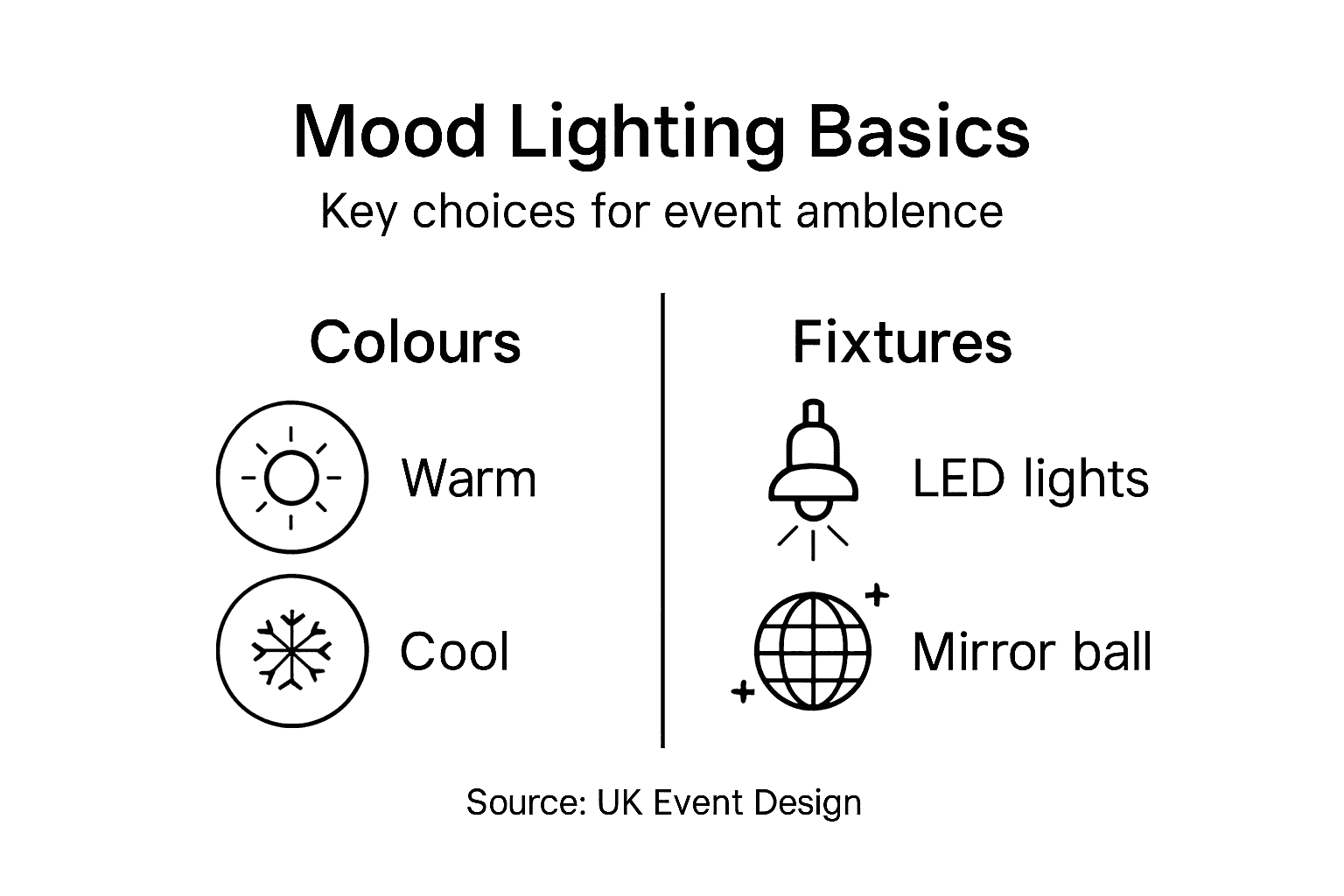
Colour selection plays a crucial role in mood generation. Cool blue tones might generate a contemporary, professional atmosphere for corporate events, whereas warm amber hues create intimate, romantic settings for weddings. Matching mirror ball installations with complementary coloured lighting ensures a cohesive and immersive visual experience.
Pro tip: Test your mirror ball and lighting configuration during venue setup to ensure optimal light dispersion and desired atmospheric effect.
Common mistakes in mood lighting design
Lighting design mistakes can significantly undermine the atmosphere and functionality of an event space. Event planners frequently encounter pitfalls that compromise the emotional impact and visual effectiveness of their lighting strategies.
Key common errors in mood lighting design include:
- Neglecting natural light sources
- Focusing exclusively on aesthetic appeal
- Failing to consider functional requirements
- Using single-source lighting
- Overlooking colour temperature nuances
- Implementing inadequate dimming mechanisms
Many designers make the critical error of planning lighting too late in the event design process. This oversight prevents comprehensive integration of lighting elements that could dramatically enhance spatial perception and emotional resonance. Lighting design errors often stem from a narrow perspective that prioritises visual appearance over psychological and practical considerations.
Technical limitations compound these challenges. Inappropriate fixture selections, incorrect positioning, and lack of adaptable lighting controls can create flat, uninspiring environments that fail to engage event participants. Successful mood lighting requires a nuanced understanding of how light interacts with space, human perception, and emotional states.
Compare these mood lighting mistakes with their impact and prevention tips:
| Mistake | Potential Impact | Prevention Tip |
|---|---|---|
| Ignoring natural light | Clashing colours, glare | Assess venue lighting at all times |
| Overly aesthetic focus | Poor functionality | Balance mood with practical needs |
| Using single-source lighting | Flat, uninspiring look | Layer multiple lighting sources |
| Wrong fixture selection | Inconsistent atmosphere | Match fixtures to event style |
Pro tip: Create a comprehensive lighting design blueprint during initial event planning stages, incorporating multiple light sources and considering both aesthetic and functional requirements.
Elevate Your Event Atmosphere with Expert Mirror Ball Lighting
Mood lighting is essential for transforming the emotional impact of any event venue in the UK. When strategic colour temperature and dynamic lighting techniques meet stunning mirror ball effects, the result is an unforgettable ambience that captivates guests and complements your event’s unique atmosphere. Whether you seek to add warm, intimate sparkle or energise a professional space with cool, contemporary lighting, choosing the right mirror ball and fixtures is crucial to mastering mood lighting.
Discover how expertly crafted mirror balls from Mirror Balls can help you avoid common lighting pitfalls such as flat visuals and inconsistent atmospheres. Our range includes everything from elegant small glitter balls for personal or decorative use to large, professional-grade disco balls ideal for theatre performances and nightclubs. With options tailored to diverse venue sizes and budgets, you can create immersive environments by layering multiple light sources and selecting complementary coloured illumination.
Ready to transform your event with spectacular mirror ball lighting that enhances every emotional cue? Visit Mirror Balls today to explore our extensive selection and expert advice. Achieve precise mood control and create memorable, atmospheric experiences that your guests will talk about long after the event ends. Don’t wait – make lighting an integral part of your event’s success now.
Frequently Asked Questions
What is mood lighting and how does it impact events?
Mood lighting is a design approach that manipulates ambient illumination to evoke specific emotional responses within a space. It influences human perception and behaviour through strategic use of colour temperature, intensity, and placement, thereby enhancing the overall event experience.
What are the key types of mood lighting used in events?
The primary types of mood lighting include ambient lighting, accent lighting, task lighting, decorative lighting, and dynamic intelligent lighting. Each serves a distinct purpose, from creating a comfortable atmosphere to highlighting specific features and energising the environment.
How can I effectively select colours and fixtures for mood lighting?
Effective selection involves considering colour temperature and the emotional responses they evoke, along with the size and reflective quality of fixtures. Pairing mirror balls with complementary lighting enhances visual effects, creating an immersive atmosphere that aligns with the event’s objective.
What common mistakes should be avoided in mood lighting design?
Common mistakes include neglecting natural light, solely focusing on aesthetics without addressing functionality, using single-source lighting, and selecting incorrect fixtures. It’s crucial to integrate multiple light sources and balance aesthetic appeal with practical requirements for the best outcomes.