Most British event organisers underestimate the power of smart decorative choices. Mirrored tile finishes can stretch perceived space and boost venue brightness by up to 30 percent compared to standard décor. For anyone arranging a themed party or live gathering, understanding how these tiles work is crucial. The following guide reveals how modern mirrored surfaces outshine old misconceptions, offering practical insights for affordable yet stunning transformations.
Table of Contents
- Mirrored Tile Finish Explained and Misconceptions
- Types of Mirrored Tile Finishes Available
- Key Features: Light Reflection and Illusion
- Common Uses in UK Venues and Events
- Installation, Maintenance, and Safety Tips
- Costs, Alternatives, and Mistakes to Avoid
Key Takeaways
| Point | Details |
|---|---|
| Mirrored Tiles Enhance Spaces | Mirrored tile finishes create immersive environments and alter spatial perception by reflecting light and expanding room dimensions. |
| Diverse Finishes for Customisation | Event professionals can choose from a variety of styles such as bevelled, antique, and textured, each offering unique aesthetic and functional benefits. |
| Practical Advantages | These tiles are durable and easy to maintain, making them ideal for high-traffic venues while enhancing light distribution. |
| Installation and Maintenance Considerations | Proper installation techniques and regular maintenance are crucial to preserve the reflective quality and longevity of mirrored tile finishes. |
Mirrored Tile Finish Explained and Misconceptions
Mirrored tile finishes represent a sophisticated design solution that transforms event spaces with remarkable visual complexity. These innovative surfaces go far beyond traditional decorative elements, offering event organisers a powerful tool for creating immersive environments. Mirrored tiles create radiant spatial illusions by reflecting light and expanding perceived room dimensions.
Traditional misconceptions often portray mirrored tiles as merely decorative accessories. However, modern iterations are technically advanced design elements with substantial functional benefits. They come in diverse geometric patterns including hexagonal, linear, and antique styles that can dramatically alter a venue’s atmosphere. Unlike previous basic designs, contemporary mirrored tiles offer nuanced aesthetic possibilities that can complement various event themes and architectural contexts.
The practical advantages of mirrored tile finishes extend well beyond visual appeal. These surfaces are remarkably durable and straightforward to maintain, making them an ideal choice for high-traffic event spaces. Reflective tiles enhance light distribution in compact or shadowed areas, effectively brightening environments and creating an sense of expansiveness. Event professionals can strategically deploy these tiles to manipulate spatial perception, making smaller venues feel more open and dynamic.
Pro Tip: When selecting mirrored tiles for event spaces, consider the venue’s existing lighting and colour scheme to ensure optimal visual integration and maximum reflective impact.
Types of Mirrored Tile Finishes Available
Event professionals have access to an extraordinary range of mirrored tile finishes that can dramatically transform venue aesthetics. Luxury mirror tile collections offer remarkable diversity in sizes, shapes, and reflective qualities, enabling precise design customisation for every event space. These tiles range from classic square formats to intricate geometric configurations, each delivering unique visual dynamics.
The primary categories of mirrored tile finishes include bevelled, antique, contemporary, and textured styles. Bevelled mirrored tiles feature subtly angled edges that create sophisticated light-catching effects, adding depth and dimensionality to walls and surfaces. Antique finishes provide a vintage-inspired aesthetic with intentionally distressed reflective surfaces, perfect for creating nostalgic or period-themed event environments. Contemporary mirrored tiles often showcase sleek, minimalist designs with razor-sharp geometric patterns that appeal to modern event styling.
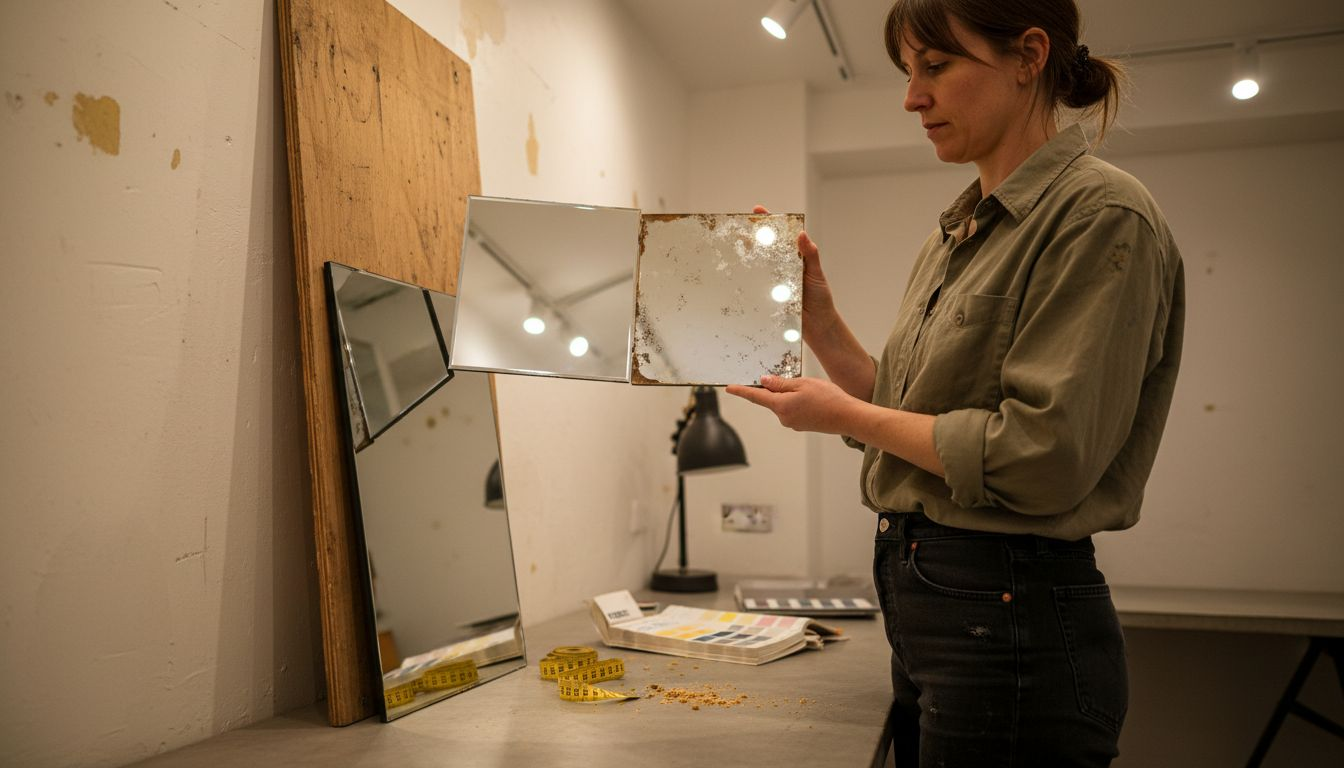
Furthermore, mirrored tile finishes are not merely decorative but functional design elements. Textured mirrored tiles, for instance, can diffuse light more dynamically, reducing harsh reflections while maintaining spatial enhancement capabilities. Event designers can select from subtle frost effects, hammered textures, or intricate etched patterns that transform standard reflective surfaces into sophisticated artistic statements. The versatility of these finishes means organisers can craft immersive environments that respond precisely to their thematic requirements.
To clarify your choices, here’s a comparison of popular mirrored tile finishes and their ideal event applications:
| Tile Finish Style | Visual Effect | Best Suited For |
|---|---|---|
| Bevelled | Creates depth with angled edges | Elegant receptions, ballrooms |
| Antique | Vintage, distressed reflectivity | Historic venues, themed events |
| Contemporary | Sleek and minimalist reflections | Modern corporate or gallery spaces |
| Textured | Softens and diffuses light | Small venues, intimate gatherings |
Pro Tip: When selecting mirrored tile finishes, always request sample tiles to test their light reflection and compatibility with your specific event lighting design.
Key Features: Light Reflection and Illusion
Mirrored tiles represent a sophisticated design strategy for manipulating spatial perception through light dynamics. Multifaceted surface designs scatter light strategically, creating transformative visual experiences that extend far beyond simple decoration. These innovative surfaces leverage complex optical properties to reshape how event spaces are perceived, dramatically altering atmosphere and spatial dimensions.
The primary mechanism of light reflection involves sophisticated interactions between surface texture, angle, and incident light. Different mirrored tile finishes produce unique optical effects: smooth surfaces create sharp, direct reflections, while textured surfaces diffuse and soften light patterns. Event designers can strategically deploy these tiles to expand perceived space, redirect natural or artificial illumination, and generate captivating visual illusions that engage attendees’ sensory experiences.
Light manipulation through mirrored tiles is a nuanced art form requiring precise understanding of reflection principles. Professional event designers consider multiple factors including tile placement, surrounding colour palette, and lighting angle to maximise spatial enhancement. Subtle variations in tile orientation can transform a confined space into an apparently expansive environment, creating depth and dimension that transcend physical architectural limitations. The strategic use of these reflective surfaces allows for remarkable visual transformations that can completely redefine an event’s aesthetic and emotional landscape.
Pro Tip: Experiment with tile placement and lighting angles during your initial venue setup to discover the most dramatic spatial illusion effects.
Common Uses in UK Venues and Events
Mirrored tile finishes have become increasingly popular across diverse UK event venues, offering transformative design solutions for everything from corporate conferences to wedding celebrations. Essential club lighting techniques demonstrate how these reflective surfaces can dramatically enhance atmospheric environments. Nightclubs in Manchester, London, and Birmingham frequently incorporate mirrored tiles to create immersive, high-energy spaces that captivate audiences and amplify visual experiences.
Specific event applications range widely across different sectors. Corporate event spaces utilise mirrored tiles to create sophisticated backdrops for product launches and networking environments, while wedding venues employ them to generate romantic, expansive atmospheres. Theatre and performance venues leverage these tiles to enhance stage lighting effects, creating dynamic visual landscapes that extend beyond traditional scenic design. Art galleries and exhibition spaces also integrate mirrored tiles as strategic design elements that manipulate light and perception.
The versatility of mirrored tile finishes extends to regional variations across British event design. In urban centres like Glasgow and Edinburgh, contemporary event spaces often feature sleek, minimalist mirrored installations that reflect industrial-chic aesthetics. Conversely, more traditional venues in rural settings might incorporate antique-finish mirrored tiles that complement historic architectural elements. This adaptability makes mirrored tiles an invaluable design tool for event professionals seeking to create unique, memorable spatial experiences across different contexts and cultural environments.
Pro Tip: Consider the specific lighting conditions and architectural context of your venue when selecting mirrored tile finishes to ensure optimal visual impact.
Installation, Maintenance, and Safety Tips
Successful mirrored tile installation begins with meticulous surface preparation and strategic planning. Proper mirror tile attachment techniques require a clean, smooth, non-porous substrate to ensure optimal adhesion and longevity. Event professionals must carefully assess the underlying surface, checking for structural integrity, levelness, and compatibility with specialised adhesive systems before commencing installation.
Technical considerations involve selecting appropriate mounting materials that balance aesthetic requirements with structural safety. Double-sided mounting tape combined with professional-grade silicone provides superior attachment for lightweight mirrored tiles, while heavier installations demand more robust mounting solutions. Critical safety protocols include wearing protective eyewear and gloves during installation, ensuring precise measurement using spirit levels, and maintaining adequate workspace ventilation to minimise potential hazards associated with adhesive application.
Maintenance of mirrored tile finishes demands a delicate approach to preserve their reflective quality and structural integrity. Avoid abrasive cleaning chemicals that might compromise the mirrored surface, instead using soft microfibre cloths and specialised glass cleaning solutions. Regular inspection helps identify potential adhesive degradation or moisture-related issues, particularly in environments with fluctuating humidity levels. Professional event designers should implement routine maintenance schedules that include gentle cleaning, careful inspection of mounting points, and prompt addressing of any signs of wear or detachment.
Pro Tip: Always conduct a small test installation in an inconspicuous area to validate adhesive compatibility and surface preparation techniques before full-scale implementation.
Costs, Alternatives, and Mistakes to Avoid
Mirrored tile installations represent a significant investment for event professionals, with pricing varying dramatically based on material quality, complexity, and coverage area. Alternative surface options provide event designers flexible solutions to manage budget constraints while maintaining aesthetic impact. Acrylic panels offer a budget-friendly alternative, delivering seamless reflective surfaces at a fraction of traditional mirrored tile costs, making them particularly attractive for large-scale event installations.
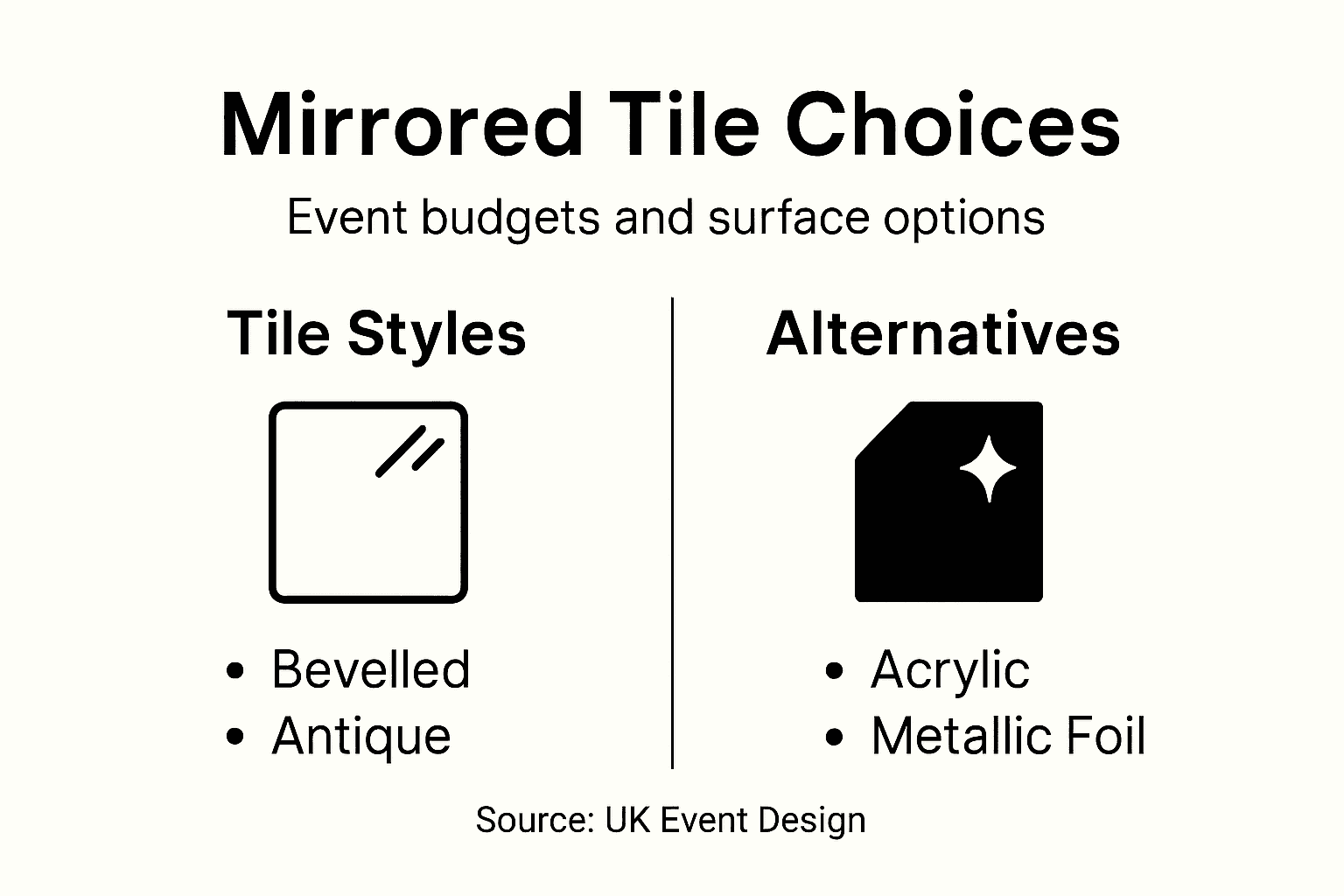
Event designers must carefully evaluate alternative materials considering performance characteristics beyond initial expense. Stainless steel surfaces provide industrial-modern aesthetics with exceptional durability, while stone resin options combine sophisticated appearance with robust structural integrity. Marble represents a luxury option delivering opulent visual effects but demanding higher maintenance investment. Each alternative material presents unique trade-offs between cost, maintenance requirements, design flexibility, and long-term performance potential.
To assist with budget and material selection, see this summary of popular reflective surface options for events:
| Surface Material | Key Advantages | Maintenance Level |
|---|---|---|
| Mirrored Tiles | High visual impact, durable | Medium—requires gentle care |
| Acrylic Panels | Cost-effective, lightweight | Low—easy to clean |
| Stainless Steel | Industrial look, robust | Low—resistant to stains |
| Marble | Luxurious, unique veining | High—prone to scratching |
Common mistakes in mirrored surface selection often stem from overlooking critical factors such as environmental conditions, maintenance capabilities, and specific event requirements. Professionals frequently underestimate the importance of surface compatibility, adhesive quality, and potential moisture interactions. Selecting materials without comprehensive understanding of their performance characteristics can lead to premature degradation, unexpected maintenance challenges, and compromised visual outcomes. Thorough research, sample testing, and consultation with specialist suppliers become essential strategies for mitigating potential installation and longevity risks.
Pro Tip: Request multiple material samples and conduct comprehensive testing under simulated event conditions before making final design commitments.
Elevate Your Event Design with Reflective Excellence
If you are exploring ways to enhance spatial perception and create captivating light illusions with mirrored finishes, consider integrating professional mirror balls to amplify your event’s atmosphere. The article highlights how mirrored tiles expand and brighten venues but also shows the importance of thoughtful light reflection and ambience control. Complementing mirrored tiles with expertly crafted mirror balls can deepen the immersive visual experience and bring dynamic energy to ballrooms, theatres, and nightclub settings.
Discover a broad selection of mirror balls at https://mirror-balls.co.uk designed for diverse event scales and budgets. Whether you require subtle sparkle for intimate gatherings or striking disco balls that command attention in large venues, our range offers durability and high reflective quality. Take the next step now and explore how combining mirrored tile finishes with quality mirror balls can transform your event space into an unforgettable sensory journey. Visit mirror ball collections and start creating immersive environments today.
Frequently Asked Questions
What are the benefits of using mirrored tiles in event spaces?
Mirrored tiles offer substantial advantages, including enhancing light distribution, making smaller venues appear more expansive, and providing durable, low-maintenance surfaces suitable for high-traffic areas.
How do I choose the right mirrored tile finish for my event?
Consider factors such as the venue’s existing lighting, colour scheme, and the desired atmosphere. Sample tiles can help assess their reflective impact in your specific environment.
What types of mirrored tile finishes are available for events?
Popular types include bevelled, antique, contemporary, and textured finishes. Each provides unique visual dynamics and is suitable for various event themes.
How should I maintain mirrored tiles after installation?
Use soft microfibre cloths and specialised glass cleaning solutions to clean mirrored tiles. Regular inspections for adhesive integrity and moisture issues are also crucial for long-term maintenance.
Recommended
- Mirrored Mosaic: Versatile Decor for Events and Venues – Mirror Balls
- What Is a Mirrored Surface? Complete Guide for Events – Mirror Balls
- Role of Reflective Surfaces in Lighting Design – Mirror Balls
- Role of Mirrors in Décor – Impact on Spaces and Atmosphere – Mirror Balls
- Mikrostruktuurin merkitys sisustuksessa – Syvyyttä ja kontrastia tiloi – Dekoja.net