Transforming a standard venue into a captivating environment often comes down to the clever use of lighting layers. For UK event planners, understanding how layered lighting combines ambient, task, and accent sources is key to shaping both atmosphere and guest experience. Mirror balls amplify these effects by reflecting and dispersing light, turning ordinary illumination into something truly dynamic. Discover how expertly balanced lighting choices, paired with the right products, can elevate any party or corporate occasion.
Table of Contents
- Layered Lighting Defined For Event Spaces
- Main Lighting Layers: Ambient, Task, Accent
- How Mirror Balls Enhance Layered Lighting
- Features And Benefits For Event Planners
- Mistakes To Avoid When Designing Layers
Key Takeaways
| Point | Details |
|---|---|
| Layered Lighting Design | Combining ambient, task, and accent lighting creates depth and enhances event atmosphere. |
| Use of Mirror Balls | Integrating mirror balls adds dynamic movement and visual excitement across all lighting layers. |
| Strategic Planning | Careful consideration of lighting placements can significantly influence guest experience and engagement. |
| Common Design Pitfalls | Avoid overemphasising one layer or poor transitions to maintain a cohesive and pleasant atmosphere. |
Layered lighting defined for event spaces
Layered lighting represents a sophisticated approach to illuminating event spaces, transforming ordinary venues into dynamic, multifunctional environments. By strategically combining different light sources and intensities, event planners can create depth, mood, and visual interest that goes far beyond traditional single-source lighting techniques.
At its core, layered lighting involves integrating multiple light types to achieve complex atmospheric effects. These layers typically include:
- Ambient lighting: The foundational, general illumination that provides overall visibility
- Task lighting: Focused illumination for specific functional areas or activities
- Accent lighting: Dramatic highlights that draw attention to particular features or create visual drama
The art of layered lighting requires careful consideration of lighting design principles, which involve understanding how different light levels support various activities and emotional experiences. Each lighting layer serves a distinct purpose, working in harmony to enhance the overall event atmosphere.
Professional event designers understand that effective layered lighting isn’t just about brightness, but about creating a nuanced sensory experience. By manipulating colour, intensity, and positioning, they can dramatically transform a space’s perceived size, ambience, and emotional resonance.
Layered lighting integrates different sources and types of light to create functionality and aesthetic appeal while managing the visitor experience.
Key Benefits of Layered Lighting:
- Creates visual depth and dimensionality
- Allows flexible atmosphere management
- Supports different event activities and moods
- Enhances architectural and decorative elements
- Provides technical and emotional control over space
Pro tip: Always test your lighting design in advance, using a venue walkthrough to understand how different light layers interact and adjust accordingly.
Main lighting layers: ambient, task, accent
Professional event lighting design relies on three critical layers that work together to create a comprehensive and dynamic visual experience. Lighting design principles reveal how these layers interact to transform event spaces from ordinary to extraordinary.
Ambient Lighting: This foundational layer provides overall illumination that allows guests to move safely and comfortably throughout the venue. It establishes the baseline brightness and sets the initial mood, typically achieved through:
- Overhead pendant lights
- Recessed ceiling fixtures
- Wall-mounted wash lights
- Soft diffused lighting sources
Task Lighting: Designed for specific functional areas, task lighting offers focused illumination that supports particular activities or highlights critical spaces within an event. These targeted light sources might include:
- Directional spotlights over catering stations
- Concentrated lighting near presentation areas
- Illuminated signs and information points
- Desk or table-specific lighting for detailed work
Accent Lighting: The most dramatic of the three layers, accent lighting adds depth, drama, and visual interest by drawing attention to specific architectural features, decorative elements, or creating focal points. Techniques include:
- Dramatic uplighting on walls
- Carefully positioned spotlights
- Coloured light projections
- Highlighting artwork or architectural details
Professional lighting design seamlessly integrates these layers to create a multifunctional and emotionally resonant environment.
By strategically combining these lighting layers, event designers can dramatically transform a space’s atmosphere, guiding guest perception and creating memorable sensory experiences that extend far beyond basic illumination.
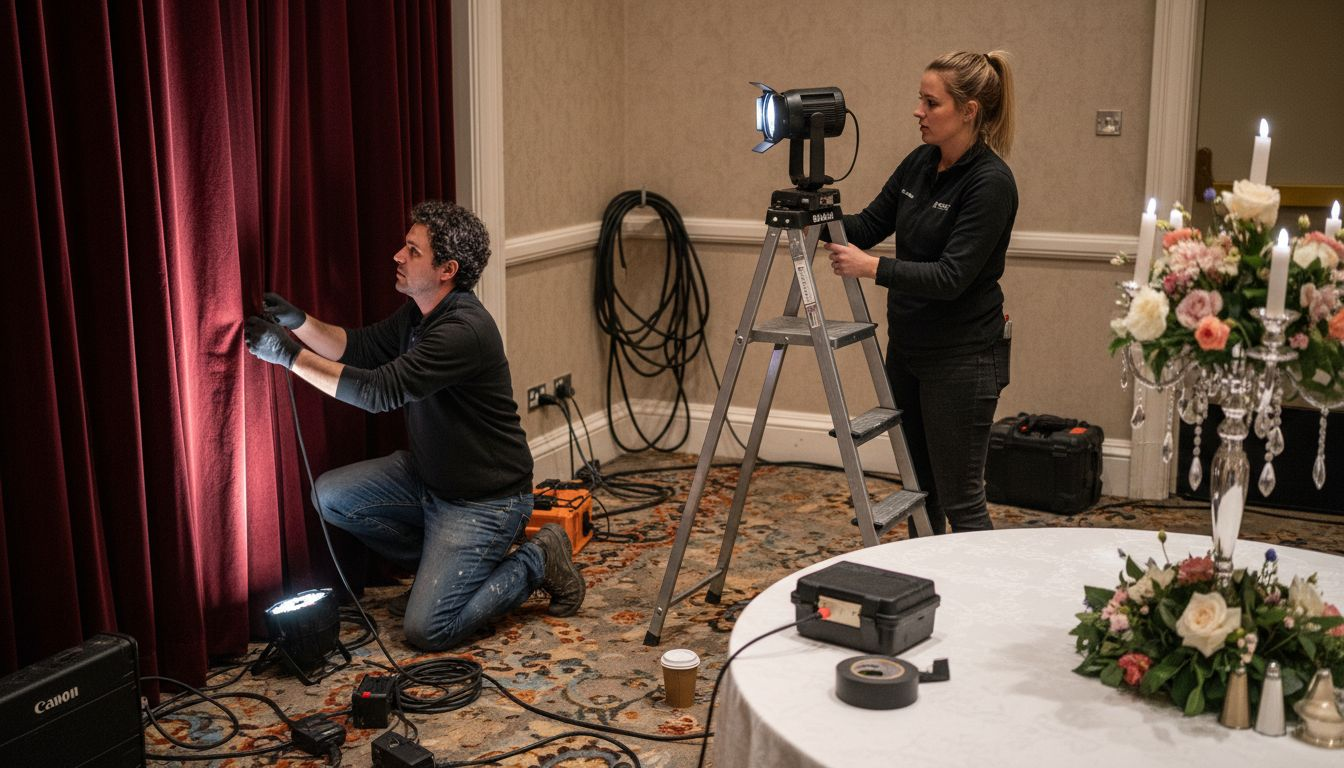
Pro tip: Always create a lighting design mockup before the event, testing how different light layers interact and complement each other to achieve the desired emotional and functional effect.
Here’s a concise comparison of the three main lighting layers and their roles in event design:
| Lighting Layer | Primary Function | Typical Effect |
|---|---|---|
| Ambient Lighting | General visibility and mood setting | Uniform brightness, safety |
| Task Lighting | Focus for activities or functions | Enhanced attention, precision |
| Accent Lighting | Highlight features, add drama | Visual interest, focal points |
How mirror balls enhance layered lighting
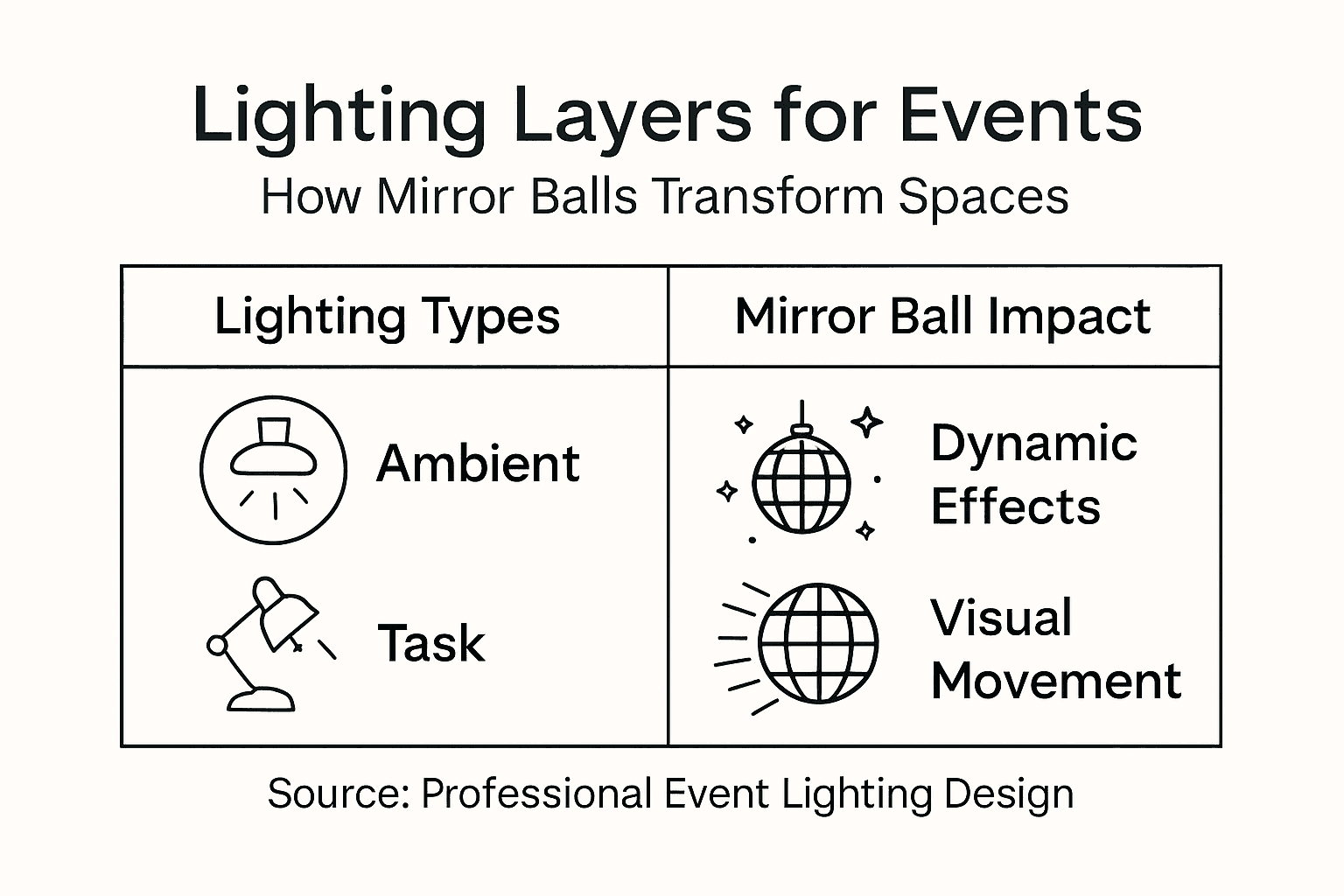
Mirror balls represent a dynamic and versatile tool for transforming event lighting, offering event designers an ingenious method to amplify lighting design principles beyond traditional static illumination techniques. These reflective spheres introduce movement, depth, and unexpected visual excitement across all three lighting layers.
Ambient Lighting Enhancement:
Mirror balls dramatically expand ambient lighting capabilities by creating a diffused, sparkling effect that fills entire spaces. Unlike standard overhead lights, they transform uniform illumination into a living, breathing visual experience. The scattered light creates:
- Soft, omnidirectional light distribution
- Gentle movement across walls and surfaces
- Atmospheric depth without harsh shadows
- A sense of expansiveness in confined spaces
Task Lighting Transformation:
By strategically positioning mirror balls, event designers can create targeted light zones that draw attention and enhance functional areas. Their reflective properties allow for:
- Dramatic highlighting of presentation spaces
- Subtle illumination of food and beverage stations
- Creating visual landmarks within larger venues
- Directing guest movement through light patterns
Accent Lighting Dramatisation:
Mirror balls excel at accent lighting, turning ordinary architectural elements into spectacular visual features. Their ability to fragment and redirect light creates:
- Dynamic shadow play
- Unexpected light trajectories
- Dramatic focal points
- Emotional atmosphere manipulation
Mirror balls transform static lighting into a dynamic, immersive sensory experience that engages and delights event attendees.
Unlike conventional lighting fixtures, mirror balls introduce an element of unpredictability and magic, turning each moment into a potential visual spectacle. Their unique ability to scatter light means they can instantly elevate even the most mundane event space into something extraordinary.
Pro tip: Experiment with mirror ball placement at different heights and angles during your venue setup to discover the most captivating light dispersal patterns.
Features and benefits for event planners
Event planners seeking innovative lighting solutions will discover that strategic lighting design principles offer transformative capabilities for creating memorable experiences. Mirror balls represent a sophisticated tool that extends beyond traditional lighting approaches, providing multiple advantages for professional event management.
Strategic Atmospheric Control:
Mirror balls enable precise manipulation of event environments, allowing planners to instantly modify mood and perception. Their unique reflective properties offer:
- Instantaneous atmosphere transformation
- Flexible lighting dynamics
- Emotional environment engineering
- Cost-effective visual drama
Technical Flexibility:
Unlike static lighting solutions, mirror balls provide event designers with unprecedented versatility. Their key technical features include:
- 360-degree light dispersion
- Adaptable to multiple venue configurations
- Minimal technical setup requirements
- Compatible with various lighting technologies
Guest Experience Enhancement:
Professional event planners recognise that lighting directly influences attendee perception and engagement. Mirror balls contribute to this by:
- Creating memorable visual experiences
- Generating unexpected light interactions
- Breaking traditional lighting monotony
- Encouraging social interaction through shared visual excitement
Effective lighting design transforms spaces from mere locations into immersive environments that capture and sustain audience attention.
Beyond aesthetic appeal, mirror balls represent a strategic investment for event professionals. They offer a perfect blend of technical innovation and creative expression, enabling planners to craft unique, dynamic experiences that distinguish their events from standard, predictable setups.
Pro tip: Conduct a pre-event lighting test to map mirror ball positions and understand their precise light dispersion patterns.
Mistakes to avoid when designing layers
Layered lighting design requires careful consideration and strategic planning. Common lighting design pitfalls can dramatically undermine the effectiveness of an event’s visual experience, turning potentially spectacular spaces into uncomfortable or disorienting environments.
Lighting Hierarchy Errors:
One of the most critical mistakes event planners make involves disrupting the natural hierarchy of lighting layers. These fundamental errors include:
- Overemphasising one lighting layer
- Neglecting the transition between layers
- Creating harsh, abrupt lighting changes
- Failing to establish a clear visual focal point
Technical Placement Mistakes:
Improper positioning of lighting elements can create unintended consequences that detract from the event experience. Specific technical errors to avoid include:
- Creating excessive glare
- Generating uncomfortable light intensity variations
- Blocking critical sightlines
- Producing unintended shadows
- Producing light spill into undesired areas
Atmospheric Disruption Risks:
Poor lighting design can fundamentally compromise the intended emotional experience of an event. Potential atmospheric disruptions involve:
- Destroying intended mood
- Creating visual fatigue
- Generating sensory discomfort
- Reducing guest engagement
- Undermining event narrative
Effective lighting design requires understanding how different light layers interact and complement each other.
Event planners must recognise that lighting is not merely a technical requirement but a sophisticated tool for crafting immersive experiences. Each lighting choice carries significant emotional and perceptual implications that can make or break an event’s success.
Pro tip: Always conduct a comprehensive lighting rehearsal, mapping out precise light interactions and potential visual conflicts before the actual event.
Consider these typical event missteps and their real-world impact:
| Common Mistake | Likely Effect on Event | Guest Experience Risk |
|---|---|---|
| Poor lighting transitions | Disjointed atmosphere | Reduced emotional engagement |
| Overuse of bright sources | Visual discomfort | Eye fatigue, decreased enjoyment |
| Neglecting focal points | Unclear visual hierarchy | Missed decorative highlights |
Elevate Your Event Atmosphere with Expert Mirror Ball Solutions
If you are looking to master the art of layered lighting and transform your event space into an immersive sensory experience, our extensive selection of mirror balls provides the perfect toolset. As highlighted in the article, effective lighting design combines ambient, task, and accent lighting while avoiding common pitfalls like harsh transitions or visual discomfort. Mirror balls enhance every lighting layer by adding dynamic movement, sparkling reflections, and captivating focal points that engage your guests and deepen emotional impact.
Discover how you can effortlessly incorporate this unique lighting element into your next event. Explore our diverse range at Mirror Balls to find professional-grade options suitable for venues of all sizes. Whether you require a subtle accent or want to dramatically amplify your ambient lighting, our tailored products and expert advice will help you create memorable, flawless atmospheres. Begin your transformation now at Mirror Balls Shop and make every event an extraordinary visual journey.
Frequently Asked Questions
What is layered lighting in event design?
Layered lighting is an approach that combines multiple light sources and intensities to create depth, mood, and visual interest in event spaces. It typically includes ambient, task, and accent lighting, each serving a specific purpose to enhance the overall atmosphere.
How can mirror balls enhance layered lighting?
Mirror balls add movement and visual excitement to layered lighting by scattering light across different surfaces, creating dynamic effects that enhance ambient lighting, transform task lighting, and dramatise accent lighting. This can elevate the sensory experience of an event.
What are the key types of lighting layers in an event?
The three key types of lighting layers are: 1) Ambient lighting, which provides overall visibility; 2) Task lighting, which focuses on specific functional areas; and 3) Accent lighting, which highlights particular features or creates dramatic effects in the space.
What are common mistakes to avoid in layered lighting design?
Common mistakes include disrupting the natural hierarchy of lighting layers, improper placement of lighting elements leading to glare or shadows, and creating an atmosphere that compromises the intended emotional experience. These pitfalls can significantly detract from the overall event experience.